
Trench soil mix (TSM) is a linear soil-mixed wall with improved engineering properties, installed using a cutting blade or post that mechanically blends in situ soils with a designed cementitious slurry. The result of the TSM installation is a stiffened linear wall with a target unconfined compressive strength and/or permeability.
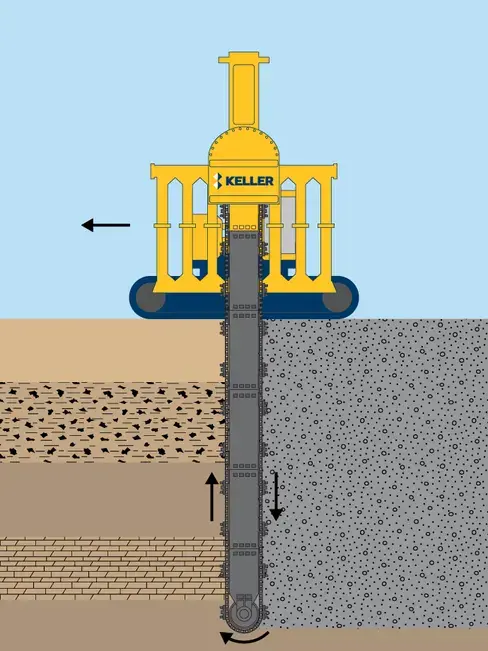
Process
Soil treatment can be accomplished with an excavator-mounted cutting blade (TSM method) or a cutter post mounted on a base crawler machine (TRD method), with installation depths of up to 150 feet; however, typical panel depths are 10 feet to 30 feet.
Trench soil mixing is performed by inserting the cutter blade/post, resembling a large chainsaw, into the in situ soil until the wall's design depth is reached. The rig then advances along the wall alignment while the cutter disaggregates and mixes the in situ soil with the designed slurry injected from ports on the post.
The vertical mixing blends the soil profile, eliminating stratification and creating the soil mix wall, commonly referred to as soilcrete, with designed depth and thickness.
Ideal trench mixing ground conditions
Trench mixing is applicable to most cohesive and granular soils; however, ease of mixing depends on soil type, strength, density, water content, plasticity, stratigraphy, and texture.
Equipment and tooling are selected based on the subsurface soil conditions. Pre-drilling can be used to improve productivity in very dense soils or soft rock, or if obstructions are anticipated.
Related geotechnical techniques
Select a technique:
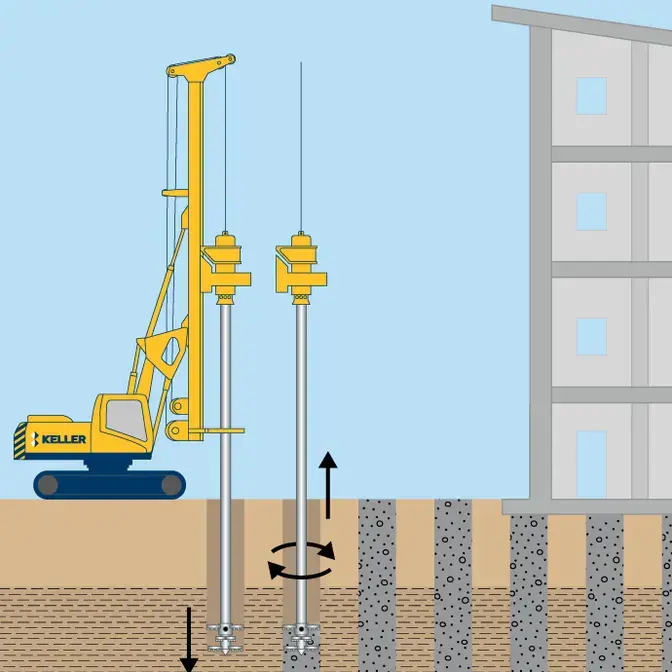
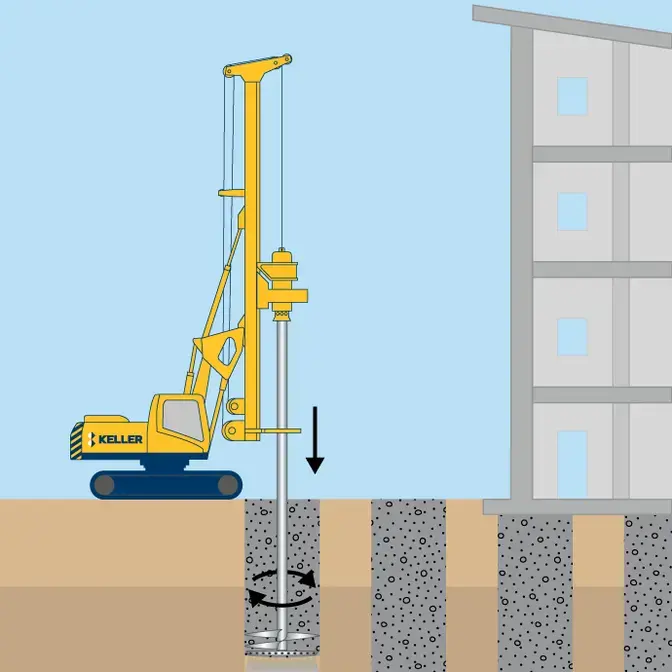
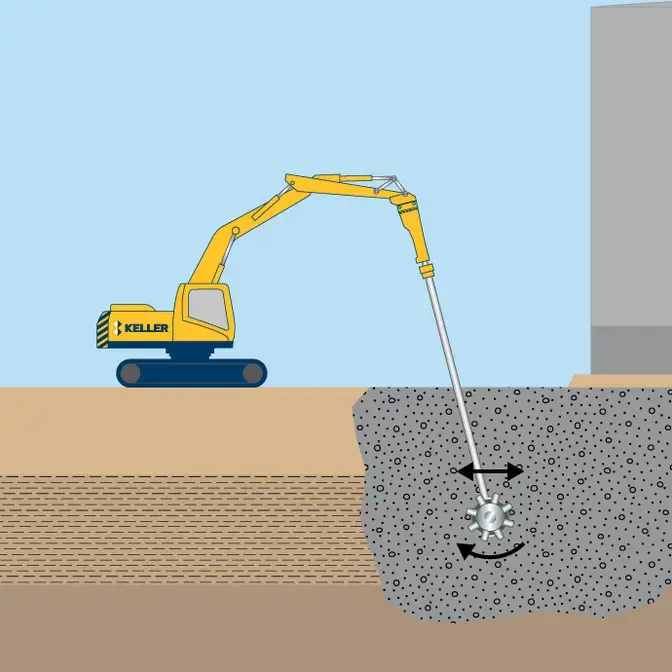
Common uses
- Create barriers to groundwater flow
- Support excavations
Advantages
- High degree of uniformity
- Low permeability
- Very consistent mix so designers can count on same strength top to bottom
- Very vertical wall (TRD has inclinometers in the post)
- Continuous mixing horizontally
- Less materials versus total excavation
- Environmentally friendly
- Very stable trench and very low chance of tip over
Quality assurance
We can ensure quality through:
- Continuously checking binder at the plant and TRD (Specific gravity, temperature, flow rate)
- Data acquisition to show exact quantity of product installed for each metre of wall
- Constantly monitoring verticality
- Checking the workability of the mix with a flow table twice per shift
- Taking wet samples at any depth and checking for strength permeability or other requirements
- Coring the wall to check wall consistency
- Upfront Bench Scale testing of mix and soils